
A research team led by Prof. LIU Jing from the Technical Institute of Physics and Chemistry (TIPC) of the Chinese Academy of Sciences (CAS) has demonstrated how room‑temperature liquid metals (LMs) can serve as critical materials for future deep‑space exploration.
The findings were published in Cell Press Blue on April 7.
As human space activities expand, human civilization is transitioning from an Earth‑centered era to an interstellar one. In extreme extraterrestrial environments, many widely used traditional materials face inherent limitations, creating an urgent need for new material systems capable of overcoming constraints from various harsh cosmic conditions.
Modern space missions require power densities well beyond the capabilities of conventional chemical and solar energy systems. To address this challenge, the team showed that liquid‑metal‑based power and energy technologies—characterized by favorable thermal and hydrodynamic properties, low saturated vapor pressure, and vibration‑free electromagnetic pumps—offer a high‑performance solution.
The researchers further interpreted the LMs enabled propulsion for deep‑space missions including interstellar travel. Field emission systems based on LMs deliver low thrust, high precision adjustability, high efficiency, and high specific impulse, making them ideally suited for ultra‑high‑precision attitude control, formation flying, and atmospheric drag compensation for micro‑ and nanosatellites.
In addition, spacecraft operate in highly complex thermal environments throughout their orbital service life. Thanks to their high thermal conductivity, inherent fluidity, and structural stability, LMs perform outstanding in space thermal management systems with profound values in AI data center, communication satellite and space station. Further, they can withstand the intense vibrational shocks of launch as well as severe aerodynamic heating during re‑entry.
The study suggests that liquid‑metal soft robotics could play vital roles in missions such as lunar base construction and planetary exploration. Furthermore, liquid‑metal additive manufacturing provides core support for the on‑demand in‑orbit printing of electronic devices and structural components, with promising prospects for utilizing extraterrestrial in‑situ resources.
Flexible conductive fibers derived from LMs enable efficient electromagnetic shielding, offering a lightweight, comfortable radiation‑protection solution for making next generation smart spacesuits. Various flexible sensors fabricated using LMs support comprehensive real‑time monitoring of astronauts’ physiological parameters and spacesuit environmental conditions. LMs can also sustain autonomous medical requirements in deep‑space environments, providing end‑to‑end life and health support for deep‑space missions independent of ground assistance.
The study concludes that LMs will play transformative roles across space energy, deep‑space propulsion, thermal management, flexible electronics, reconfigurable robotics, in‑orbit manufacturing, life support, and space optics.
This work was supported by the National Natural Science Foundation of China, the Key Research Program of the State Key Laboratory of Cryogenic Science and Technology, and other funding agencies.
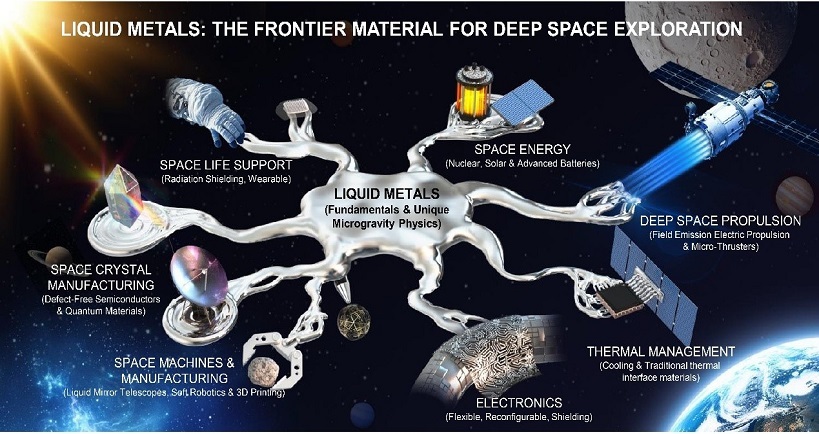
Figure1. Outlook of Liquid Metals Space R&D (Image by LIU Jing's Group)
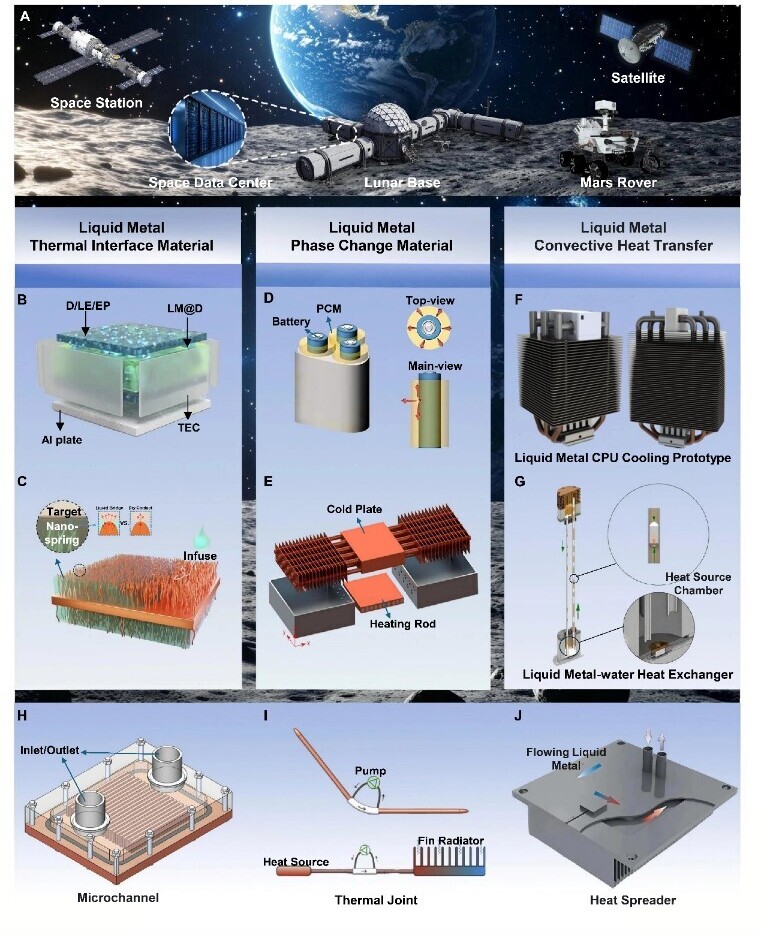
Figure2 Application scenarios of liquid metals space thermal management (Image by LIU Jing's Group)
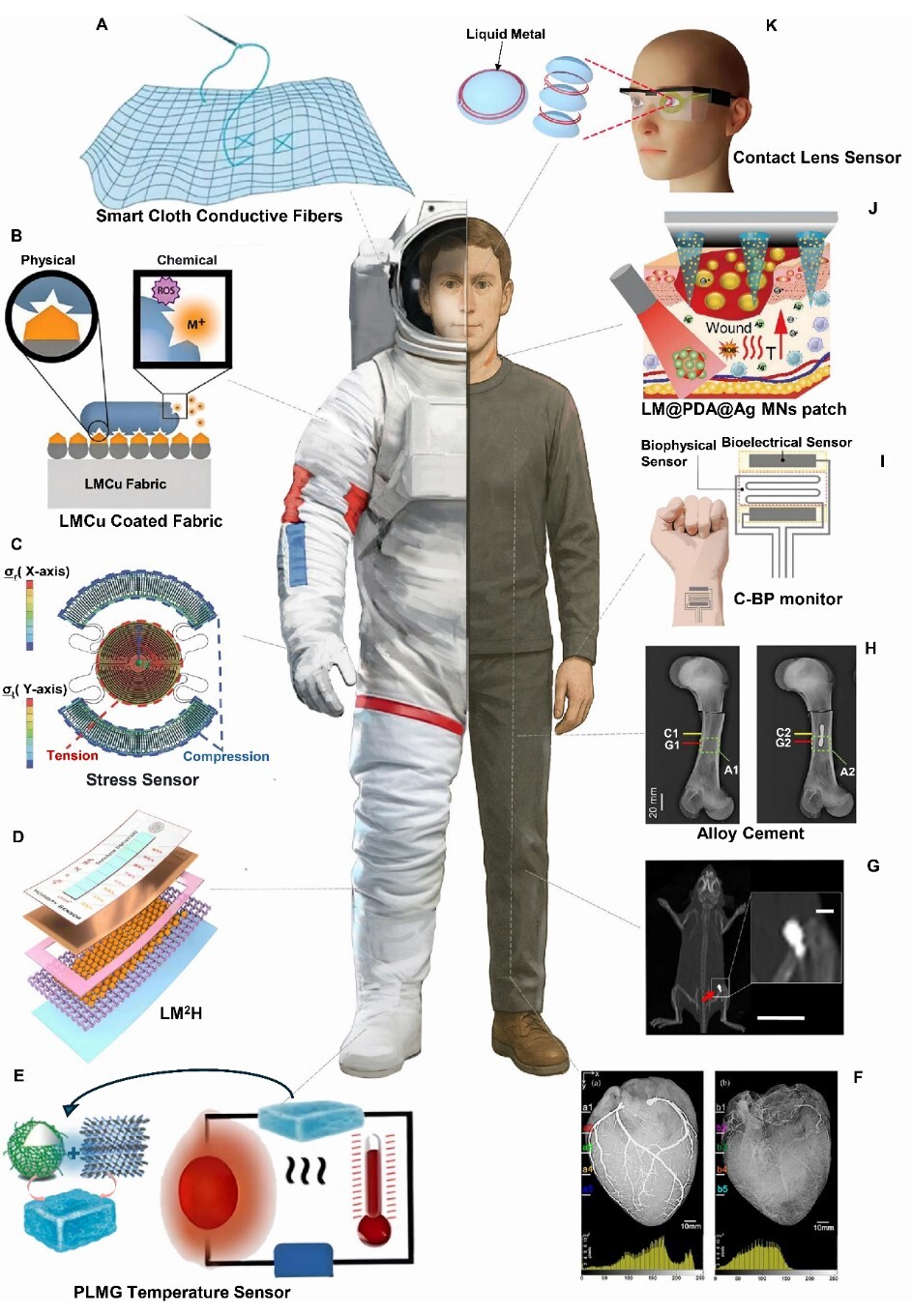
Figure3 Liquid metal technologies for space life support (Image by LIU Jing's Group)



NEWS